
Executive Summary
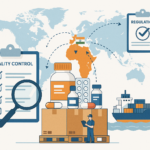
In the global pharmaceutical industry, certifications such as WHO-GMP (World Health Organization – Good Manufacturing Practices) and ISO (International Organization for Standardization) play a crucial role in ensuring product quality and safety. These certifications are vital for companies aiming to export their products internationally, as they provide assurance to buyers about the adherence to stringent quality standards. Understanding the differences and implications of these certifications is essential for global buyers to make informed purchasing decisions.
Technical Analysis
Understanding WHO-GMP Certification
WHO-GMP certification is a system that ensures products are consistently produced and controlled according to quality standards. It is designed to minimize the risks involved in pharmaceutical production that cannot be eliminated through testing the final product alone. This certification is particularly important for companies looking to export to countries where WHO guidelines are a benchmark for quality assurance.
– WHO-GMP focuses on the entire manufacturing process, ensuring that every step meets international quality standards.
– It is recognized globally, making it a critical factor for companies aiming to enter international markets.
Interpretation:
For pharmaceutical companies, obtaining WHO-GMP certification is not just about compliance but also about gaining a competitive edge in the global market. It signals to buyers that the company adheres to high-quality manufacturing practices.
ISO Certification in the Pharmaceutical Industry
ISO certification, particularly ISO 9001, is a quality management system standard that applies to various industries, including pharmaceuticals. It emphasizes customer satisfaction and continuous improvement, ensuring that companies meet regulatory and customer requirements consistently.
– ISO 9001 focuses on quality management principles, including a strong customer focus and the motivation of top management.
– It is applicable to any organization, regardless of its size or the industry it operates in.
Interpretation:
ISO certification provides a framework for companies to improve their processes and enhance customer satisfaction. For buyers, it indicates that a company is committed to maintaining high-quality standards and continuous improvement.
Comparative Analysis: WHO-GMP vs ISO
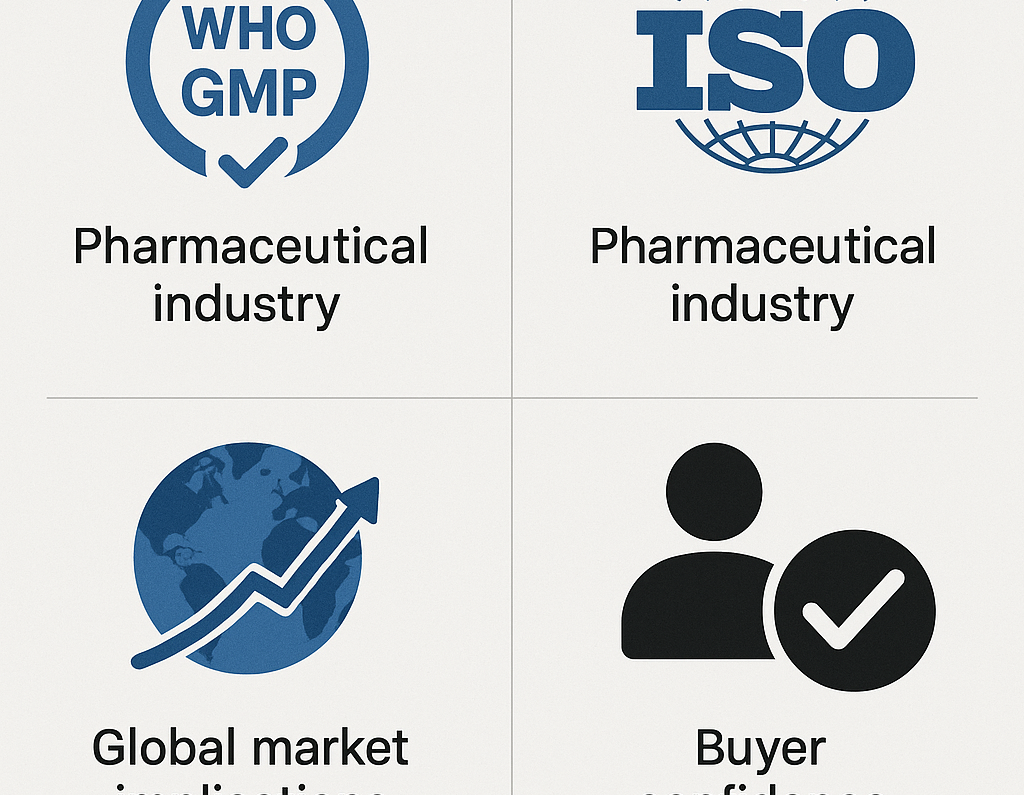
While both WHO-GMP and ISO certifications aim to ensure quality, they differ in their focus and application. WHO-GMP is specific to the pharmaceutical industry, focusing on manufacturing practices, whereas ISO is broader, applicable to various industries with an emphasis on quality management systems.
– WHO-GMP is more detailed in terms of pharmaceutical manufacturing processes.
– ISO provides a more general framework for quality management applicable across industries.
Interpretation:
For global buyers, understanding these differences is crucial. WHO-GMP certification may be more relevant for assessing the quality of pharmaceutical products, while ISO certification indicates a company’s overall commitment to quality management.
Implications for Stakeholders
For Startups
– Startups in the pharmaceutical industry should prioritize obtaining WHO-GMP certification to establish credibility and access international markets.
– ISO certification can enhance operational efficiency and customer satisfaction, providing a competitive advantage.
For Investors
– Investors should consider companies with WHO-GMP certification as they are likely to have robust quality control systems in place.
– ISO-certified companies may offer better risk management and operational efficiency, making them attractive investment opportunities.
For Policy Makers / Ecosystem
– Policymakers should encourage local pharmaceutical companies to obtain WHO-GMP certification to boost exports and enhance global competitiveness.
– Supporting ISO certification can drive overall industry quality improvements and economic growth.
Action Points
For Early-Stage Startups
– Conduct a gap analysis to identify areas needing improvement for WHO-GMP compliance.
– Implement a quality management system aligned with ISO standards to streamline operations.
For Growth-Stage / Investors
– Invest in training and infrastructure to maintain WHO-GMP standards.
– Leverage ISO certification to enhance brand reputation and customer trust.
Frequently Asked Questions
1. What is the primary difference between WHO-GMP and ISO certification?
WHO-GMP is specific to the pharmaceutical industry, focusing on manufacturing practices, while ISO certification applies to various industries, emphasizing quality management systems.
2. Why is WHO-GMP certification important for pharmaceutical exports?
WHO-GMP certification ensures that pharmaceutical products meet international quality standards, which is crucial for gaining access to global markets.
3. How does ISO certification benefit a pharmaceutical company?
ISO certification helps improve operational efficiency, customer satisfaction, and provides a framework for continuous improvement, enhancing overall business performance.
4. Can a company have both WHO-GMP and ISO certifications?
Yes, a company can have both certifications, which can enhance its credibility and demonstrate a comprehensive commitment to quality.
5. How do these certifications impact buyer confidence?
These certifications assure buyers that the company adheres to high-quality standards, reducing the risk of purchasing substandard products.